https://www.wonarm.com/the-unbridged-giant-why-no-bridge-crosses-the-amazon-river/
When we think of bridges connecting two banks, most people probably think of the Brooklyn Bridge in New York, the Golden Gate Bridge in San Francisco, or the hundreds of bridges that span the Nile River. However, surprisingly, the world’s second longest river, the Amazon, does not have a single bridge .
The Amazon River runs across South America, with a total length of more than 7,000 kilometers , only slightly shorter than the Nile River. However, there are more than 100 bridges on the Nile River, connecting cities and towns along the coast, facilitating daily transportation. In contrast, residents on both sides of the Amazon River still rely on ferries to travel. Why is this? The reason behind this is not just “lack of construction”, but the result of a series of geographical, ecological, economic and even cultural factors.
The Amazon River: A river that is more alive than you think
Before we go any further, we need to understand the basic characteristics of the Amazon River:
Basin area : about 7 million square kilometers , the largest basin in the world, covering eight countries including Brazil, Peru and Colombia.
River length : about 6,992 kilometers , second only to the Nile River in length, but the world’s largest in water volume, with annual runoff accounting for one-fifth of the world’s total river flow.
Biodiversity : The Amazon basin is the most biologically diverse region on Earth, home to more than 3,000 species of fish, over 400 species of mammals, and millions of insects.
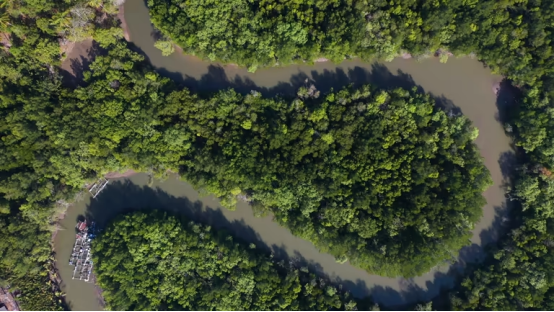
Looking down from the air, the Amazon River is like a gray-brown dragon winding through the green tropical rainforest. Its water volume is so huge that traces of fresh water can still be detected in the sea water dozens of kilometers away from the estuary.
Why is there no bridge? Three key reasons
1. The “ghost river” hidden under the riverbed
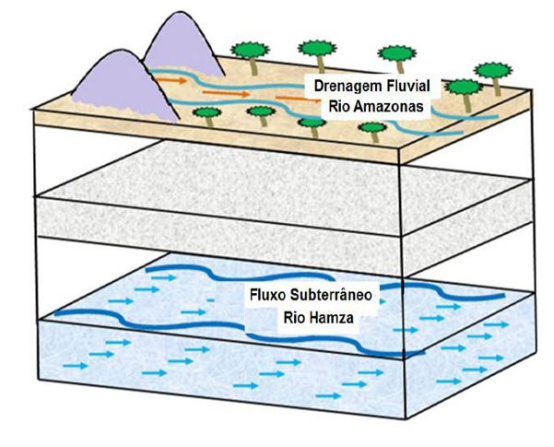
In 2011, Brazilian scientists discovered in geophysical data that there is a huge underground water flow at a depth of about 4 kilometers below the Amazon River. Scientists named it the Hamza River .
This “ghost river” is almost parallel to the Amazon River and is nearly 6,000 kilometers long. Although it flows slowly, its existence means that the geological structure is extremely complex. The soft sedimentary layer and groundwater activity make it difficult for the upper foundation to be stable. Trying to build a bridge on such geological conditions is tantamount to driving piles on “living sand . “
Bridge construction requires a solid foundation, but the Amazon’s soft soil and changing water tables make any large-scale construction risky.
2. River Width: Transformation from “River” to “Inland Sea”
The average width of the Nile is about 2 kilometers , while the average width of the Amazon River during the dry season is about 4 to 5 kilometers. The problem is that the water level of the Amazon River fluctuates greatly with the rainy season:
Low water season : width is about 2 to 4 kilometers
Rainy season : can expand to 30 to 50 kilometers , almost like an inland sea
This means that even if you build a bridge in the dry season, it may need to cross several times the original distance in the rainy season. What’s worse is that the water level of the river changes unpredictably in different years and different regions, and the river bank keeps moving. For engineers, this uncertainty is a nightmare.
3. Population distribution and economic factors
The bridge is not only an engineering problem, but also an economic and social problem. The Amazon basin is sparsely populated, major cities such as Manaus and Belem are far apart, and most of the coast is rainforest, wetlands and small villages.
Building a bridge that spans several kilometers and may even require additional flood control and reinforcement works is extremely expensive, but its frequency of use is extremely low. In contrast, locals rely on boats and ferries, which is both economical and environmentally friendly.
For example, in the United States, building a modern cross-river bridge costs billions of dollars. In the Amazon, building a bridge that can withstand floods, silt erosion, and ensure a stable foundation may cost several times more without bringing corresponding economic returns.
So why not build more bridges or tunnels?
Many people would ask: If bridges are not possible, what about tunnels? In fact, this is almost impossible. The reasons are:
The groundwater is abundant and under great pressure. If the tunnel leaks, the consequences will be disastrous.
Complex geological conditions and lack of stable rock formations
The humid and hot climate makes maintenance more difficult
At present, the Brazilian government has indeed proposed to build tunnels to connect certain cities, but the plans have remained on paper.
The only crossing: where is it?
Interestingly, the Amazon River Basin is not completely without bridges, but these bridges are all on tributaries , not on the main river.
For example, in the Brazilian city of Manaus, there is a bridge across the Rio Negro River ( Rio Negro Bridge ), which is about 3.6 kilometers long and is currently the most famous cross-river bridge in the region. But even so, it is still some distance away from the main Amazon road.
In other words, the main channel of the Amazon River still maintains a record of “zero bridges”, which is extremely rare among the major rivers in the world.
The Amazon River: A natural “forbidden zone”?
In addition to engineering and economic factors, there is a deeper reason – protecting the ecosystem .
The Amazon rainforest is known as the “lungs of the earth” and plays an important role in absorbing carbon dioxide and regulating the global climate. Building a bridge means building a road, which will lead to deforestation, destruction of species habitats, and may even lead to more illegal logging and land development.
In recent years, the Brazilian government and environmental organizations have been engaged in a fierce debate over infrastructure construction. A bridge may bring economic convenience, but it may also be the beginning of an ecological disaster.
The discovery of the Hamza River: Redefining the Amazon?
The discovery of the Hamza River not only reveals why it is difficult to build a bridge over the Amazon River, but also makes scientists rethink the hydrological system in this area. Scientists speculate that this underground river interacts with the surface river to shape the unique ecology of the Amazon. This “double-layer river” phenomenon is extremely rare worldwide.
If you think the Amazon is just a river, you underestimate its complexity. It is more like a huge “water world”, intertwined on the surface and underground, like a natural machine that has been running for millions of years.
Is it possible to have bridges in the future?
Technically, perhaps one day, as materials and engineering advances, a bridge across the Amazon will be possible. But the question is: do we need it?
In the context of globalization and sustainable development, is building such a bridge worth the ecological risks, huge costs and engineering uncertainties? Or should we respect nature and preserve the last “original appearance” of this world-class river?
What do you think?
If it were possible to build a bridge across the Amazon River in the future, would you support it?
Pro : Promote transportation and economic development
Against : Protect the ecology and keep it in its natural state
Feel free to share your thoughts in the comments section, and don’t forget to share this article with your friends who love geography and natural sciences.
https://www.wonarm.com/the-unbridged-giant-why-no-bridge-crosses-the-amazon-river/