https://www.wonarm.com/russias-geopolitical-frontiers-a-deep-dive-into-kaliningrad-alaska-altay-and-the-peanut-hole/
There is a little-known area on the global ocean map that once caused Russia a lot of trouble. The existence of this area not only exposed a loophole in international law, but also triggered a “gold rush” in the fishing industry of many countries in the 1990s. Its name even sounds a bit playful – Peanut Hole .
Why is this region so special? What kind of geopolitical game does it hide?
What is the Peanut Hole? Where is it?
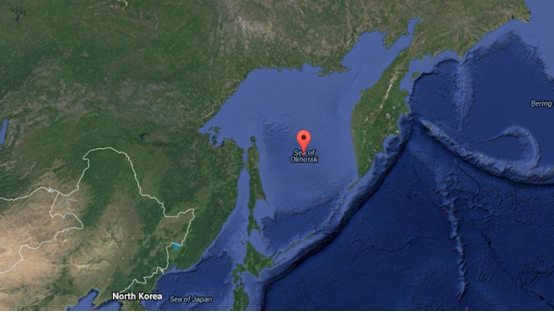
The “Peanut Hole” is a common name for an area of water in the North Pacific Ocean, located in the center of the Sea of Okhotsk. From the map, the entire Sea of Okhotsk is almost completely surrounded by Russian territory, but there is a small area in the middle that is shaped like a peanut, which happens not to belong to any country’s exclusive economic zone (EEZ).
According to the United Nations Convention on the Law of the Sea , the exclusive economic zone of a coastal country can extend 200 nautical miles (about 370 kilometers) from the coastline . Within this range, the country has the exclusive right to develop resources such as fisheries and energy. The problem is that Peanut Cave is more than 200 nautical miles from part of the Russian coast. Although it is surrounded by Russian territory, international law does not recognize that it automatically belongs to Russia .
This means that Peanut Hole is a “high seas” in the sense of international law, and any country can legally enter and fish for fishery resources.
Why is it so important?
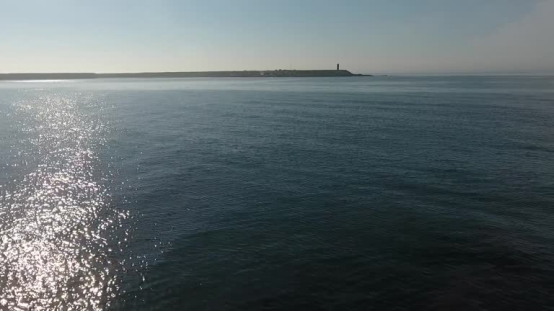
Although it is just a blank space on the nautical chart, this area is a hot spot in the global fishing industry.
The Sea of Okhotsk is one of the richest fishing grounds in the world, rich in commercial fish such as cod, haddock, herring, and crabs , and Peanut Cave is located in the migration channel of these fish. Scientists estimate that the annual catch of fish resources in Peanut Cave alone may reach hundreds of thousands of tons.
The resources of this sea are undoubtedly vital to Russia in its post-Cold War economic turmoil, but international rules make it open waters, opening the door to fishing boats from other countries.
The “fishing gold rush” of the 1990s
In the 1990s, the Soviet Union collapsed, Russia fell into economic difficulties, and the government’s management of the Far East waters became loose. At this time, international fishing companies smelled an opportunity.
Since 1991 , fishing boats from Poland, South Korea, Japan, Bulgaria and even Ukraine have flocked to Peanut Cave like sharks smelling blood. They fly different national flags, but have the same goal: to catch as much as possible in this “no man’s sea”.
By 1993 , Peanut Hole had become one of the busiest fishing areas in the world:
More than 200 foreign fishing boats in a single day
The annual catch was as high as 500,000 tons , equivalent to one-third of Russia’s domestic fishery output at the time.
For Russia, this is not only an economic loss, but also a threat to national resource security. It can be said that the Peanut Hole has become a thorn in Russia’s maritime strategy.
Russia’s counterattack: a dual battlefield of science and law
In order to reverse the situation, Russia began to look for legal and scientific grounds to include Peanut Hole in its exclusive economic zone. International law is not immutable, and the key lies in whether you can provide sufficient evidence to prove that this sea area is a natural extension of your continental shelf .
so-called continental shelf refers to the geological structure extending from the land to the seabed. If it can be proved that the area where Peanut Cave is located belongs to Russia’s continental shelf, Russia has the right to claim the right to develop resources in this area.
As a result, Russia invested a lot of resources in geological and oceanographic surveys:
Seismic surveys and sediment analysis confirmed that the Peanut Cave is indeed connected to the Siberian continental shelf
Submit a detailed report to the United Nations Commission on the Limits of the Continental Shelf (CLCS)
After years of scientific research and legal procedures, Russia finally received international recognition in March 2014 and officially included Peanut Hole in its exclusive economic zone. This move ended a two-decade resource war and made Russia’s strategic position in the Far East more secure.
Why are other countries so persistent?
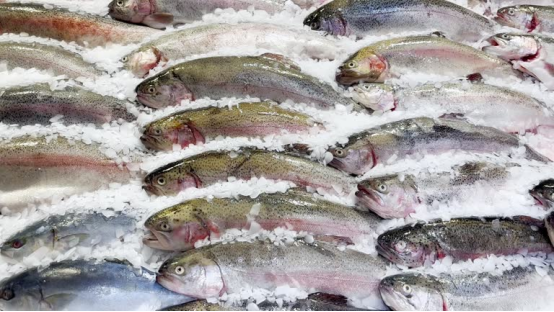
For Poland, South Korea, Japan and other countries, Peanut Hole means scarce marine resources. Pollock, in particular, is the main raw material for processing fish fillets and surimi, and is widely used in the global food industry. For South Korea and Japan, the pollock in Peanut Hole is almost an important source of fried fish sticks and surimi products.
In the 1990s, as global fish stocks were depleted, such “international fisheries” were a lifeline. No wonder fishing companies in these countries felt lost when Russia began to take back control.
What does the peanut hole incident reveal?
This ocean game is not just a marine story, it reflects three deep-seated problems:
1. The gray area of international law
The United Nations Convention on the Law of the Sea provides a general framework, but there are still loopholes. For example, how to balance the interests of neighboring countries and the international community in a “surrounded high seas” like Peanut Hole? Will Russia’s approach become a new example for future maritime disputes?
2. The intersection of science and geopolitics
In modern international relations, scientific evidence not only serves academics, but also becomes an important tool for national interests. Russia’s victory in the legal battle through geological research is a typical case of “scientific diplomacy”.
3. Competition for marine resources is becoming increasingly fierce
As the global population grows and land resources become depleted, the ocean is becoming the frontier of a new round of resource competition. From the Arctic route to the South China Sea and then to Peanut Cave, this trend is becoming more and more obvious.
Future: Will similar “peanut holes” appear again?
The answer is yes. There are still many similar legal gray areas in many seas around the world, especially in emerging strategic areas such as the Arctic and deep-sea mining areas. With technological advances and rising energy demand, the future “ocean gold rush” may be more intense than the 1990s.
The question is: How do we find a balance between resource utilization and ecological protection?
What do you think?
If a country discovers an “international fishing ground” like the Peanut Hole, does it have the right to incorporate it into its territory through scientific and legal means?
Support : The country should protect its own interests
Opposition : The high seas should remain internationally shared
You are welcome to leave your opinions in the comment section, and you can also share this article with friends who are interested in international relations and maritime law.
https://www.wonarm.com/russias-geopolitical-frontiers-a-deep-dive-into-kaliningrad-alaska-altay-and-the-peanut-hole/