https://www.wonarm.com/russias-geopolitical-frontiers-a-deep-dive-into-kaliningrad-alaska-altay-and-the-peanut-hole/
A besieged territory
On the map of Europe, there’s a unique geopolitical phenomenon: Russia’s Kaliningrad Oblast. This 15,100 square kilometer territory is not connected to mainland Russia, but rather surrounded by Poland and Lithuania, approximately 400 kilometers from the main Russian mainland. It serves not only as Russia’s gateway to the Baltic Sea but also as a frontier position for direct contact between NATO’s eastern flank and Russia.
So, how did this land, which originally belonged to Germany, become Russian territory?
Historical background of East Prussia
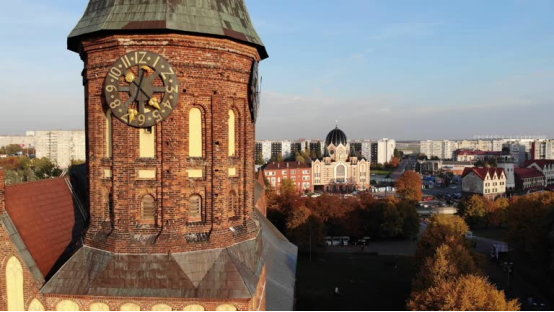
Before World War II, this region was known as East Prussia and was part of the German Empire. Its capital, Königsberg, boasts a rich history and cultural tradition. It was once the birthplace of the Kingdom of Prussia and the hometown of the philosopher Kant. Before World War II, over two million ethnic Germans lived here, maintaining close cultural, linguistic, and political ties with mainland Germany.
However, as World War II progressed, East Prussia’s fate changed dramatically. Between 1944 and 1945, the Soviet Red Army entered East Prussia during its counter-offensive on the Eastern Front. Fierce fighting led to the destruction of many cities and the mass exodus or deportation of residents.
Potsdam Agreement and postwar partition
The Potsdam Conference of 1945 decided the fate of East Prussia. The victorious powers, the United States, Britain, and the Soviet Union, reached a consensus:
The southern part of East Prussia was ceded to Poland to compensate for the large amount of eastern territory lost by Poland in the war;
The north was taken over by the Soviet Union as a war trophy.
This allocation was not only a redrawing of postwar borders but also a reflection of the balance of power between major powers. In 1946, the Soviet Union officially renamed Königsberg Kaliningrad in honor of Soviet politician Mikhail Kalinin and established it as part of the Russian Soviet Federative Socialist Republic.
Migration and replacement of population in Germany
After the Soviet takeover, nearly all of Kaliningrad’s original German residents, numbering over one million, were expelled or fled. They were replaced by immigrants from across the Soviet Union, particularly Russians and Belarusians. Within a few years, Kaliningrad’s ethnic composition was radically altered, transforming it from a quintessentially German urban cluster into a Sovietized industrial and military powerhouse.
This large-scale population replacement caused Kaliningrad to lose its direct connection with German culture and become completely integrated into the Soviet territory.
Cold War military fortress
With the onset of the Cold War, Kaliningrad’s strategic significance rapidly grew. Its strategic location on the Baltic Sea coast not only controlled sea lanes but also served as a forward base for the Soviet Navy. The Soviet Union deployed numerous military facilities there, including the headquarters of the Baltic Fleet.
During the East-West confrontation, Kaliningrad became the Soviet Union’s strongest frontier stronghold in western Europe, forcing NATO to constantly respond to possible military pressure from this enclave.
Survival after the collapse of the Soviet Union
In 1991, after the disintegration of the Soviet Union, the three Baltic states (Estonia, Latvia, and Lithuania) became independent one after another, but Kaliningrad remained with Russia. This enclave became an area directly bordering Russia, the European Union, and NATO countries.
With the accession of Lithuania and Poland to the EU and NATO, Kaliningrad has been effectively surrounded by the Western bloc, making it heavily dependent on transit agreements with its neighbors for economic and transportation purposes, but also making it a strategically indispensable frontier fulcrum for Russia.
The dual identity of modern Kaliningrad
Today, Kaliningrad is both a regular Russian oblast and a sensitive geopolitical hotspot. It plays a crucial role in Russia’s military, hosting missile systems and the Baltic Fleet. At the same time, it strives to maintain economic and cultural ties with Europe, developing its local economy through port trade, the amber industry, and tourism.
However, this dual identity also brings challenges: on the one hand, it needs to maintain close political and military ties with Russia; on the other hand, it is surrounded by the EU and NATO, and its economic exchanges and transportation are difficult to separate from the support of neighboring countries.
The EU and Kaliningrad: Transport and trade dilemmas
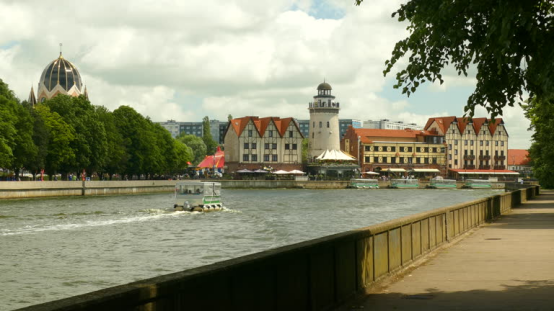
After Poland and Lithuania joined the European Union in 2004, Kaliningrad’s land connection to mainland Russia had to pass through EU member states. This made the movement of freight and people dependent on transit permits. While Russia and the EU established a special transit system for a period of time, geopolitical tensions often made this arrangement uncertain.
In particular, following the outbreak of the Russo-Ukrainian war in 2022, the EU imposed large-scale sanctions on Russia. Lithuania temporarily restricted the transport of some Russian products through its territory to Kaliningrad, sparking a fierce dispute between Russia and the EU. This incident highlighted Kaliningrad’s sensitive position in the geopolitical chessboard: any transit dispute could potentially escalate into a diplomatic crisis.
Military Outposts and Strategic Deterrence
Kaliningrad’s military presence makes it a key lever for Russia in Europe. It’s widely believed to house the Iskander short-range missile battery, capable of covering nearly all of Poland and the Baltic region. As the home of the Baltic Fleet, it exercises crucial control over sea lanes.
From NATO’s perspective, Kaliningrad is considered a core area of “anti-access/area denial” (A2/AD), meaning it can exert a strong deterrent on surrounding air and sea areas through missiles, ships, and air defense systems. This is why Kaliningrad often appears in NATO’s strategic scenarios during military exercises.
Economic and social challenges
Despite its significant military importance, Kaliningrad’s economic situation is not optimistic. Geographical isolation and sanctions have limited industrial development. The Russian government has attempted to attract investment by establishing “special economic zones,” but with limited success.
Amber is Kaliningrad’s most distinctive resource, boasting the world’s largest amber reserves, accounting for over 90% of the world’s known reserves. However, a single resource alone cannot sustain regional development, and young people often choose to migrate to Russia or European cities in search of opportunities.
The intersection of history and reality
Kaliningrad’s existence is a direct product of the post-World War II order. Its fate reflects not only the brutal logic of war and great power politics, but also the profound impact of the Cold War and its subsequent geopolitical landscape.
What would the map of Europe look like today if East Prussia hadn’t been partitioned? If Kaliningrad had become an independent entity after the collapse of the Soviet Union, would it have been integrated into Europe like the three Baltic states? While these questions have no answers, they reveal the unique status of this enclave in the European political landscape.
The future of Kaliningrad: a bridge or a powder keg?
Kaliningrad’s future will likely depend on the trajectory of Russia-EU relations. If tensions persist, it will continue to serve as a forward Russian arms depot and one of the most sensitive flashpoints in European security.
But from another perspective, Kaliningrad could also become a bridge between Russia and Europe. Its geographical location gives it the potential to develop into a gateway city for regional cooperation, much like the role Hong Kong once played in Asia.
The key is whether Europe and Russia will find some new balance in the coming decades.
https://www.wonarm.com/russias-geopolitical-frontiers-a-deep-dive-into-kaliningrad-alaska-altay-and-the-peanut-hole/