https://www.wonarm.com/iran-and-the-middle-east-geopolitical-power-and-natural-fortresses/
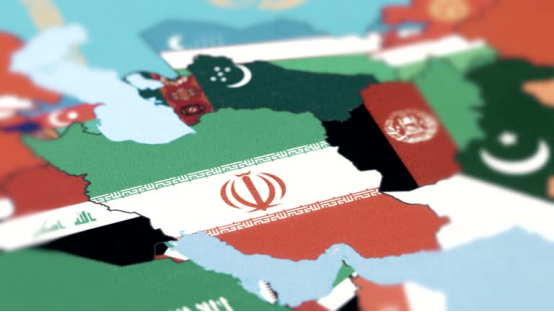
Iran, a country with a long history of civilization, is often regarded by the outside world as a geopolitical hub in the Middle East. In contemporary international relations, Iran’s strategic position is crucial, but surprisingly, it has hardly been breached by foreign enemies from the front. The reason is that Iran’s unique geographical environment provides an indestructible natural barrier, shaping the tenacious defense of this land. This article will analyze in detail how Iran’s terrain has become the core of its military advantage, and explore its triple natural barriers and the profound impact of geography on modern military strategy.
Iran’s unique position in global geopolitics
Iran is located in the heart of the Middle East in West Asia, bordering the Persian Gulf to the south, the Caspian Sea to the north, the vast desert to the east, and the rugged mountains to the west. It connects the three continents of Asia, Europe and Africa and is an important energy transportation hub. Especially the Persian Gulf and the Strait of Hormuz make Iran a key node that cannot be ignored in the global energy supply chain. Controlling Iran means controlling the important “lifeline” of global oil supply, which makes many world powers eyeing it covetously.
However, despite many external pressures, Iran has successfully resisted many invasions and challenges with its unique geographical environment. Understanding these natural barriers can help us better understand the country’s security system.
Detailed explanation of the three major natural defense barriers
Eastern Desert: Natural “Great Wall of Steel”
The vast desert area in eastern Iran was the first obstacle to the enemy. The desert, with its extreme climate and complex terrain, brings serious logistical and mobility difficulties to any army’s attack. In history and modern wars, the desert has always been a natural “killer”. The enemy can easily lose their way here, and the supply lines can be easily cut off.
This desert not only provides defensive convenience, but also indirectly facilitates Iran’s “war of attrition” strategy against the enemy. The enemy consumes a lot of resources and morale in the harsh environment, which gives the Iranian army a time window to counterattack.
Western Zagros Mountains: a natural military fortress
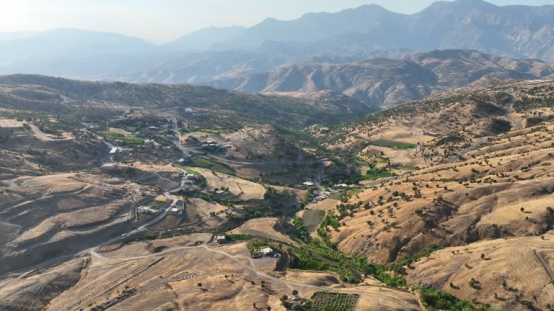
The Zagros Mountains stretch for more than 1,200 kilometers, with rugged terrain and numerous rocky cliffs, forming an impenetrable natural barrier. In military strategy, mountain warfare is considered the most complex and costly form of warfare. Defenders can use the high ground to set up ambushes and defensive positions, and the narrow passages are extremely easy to defend.
Historically, many empires that attempted to invade Persia were stopped by this mountain range. Its existence greatly restricted the activities of the enemy’s mechanized and armored forces, and became a solid line of defense in western Iran.
The Alborz Mountains in the north: an iron wall
The Alborz Mountains extend along Iran’s northern border, protecting the country’s northern territories like a barrier. The mountain range stretches from the border of Azerbaijan to the Caspian Sea, and is a natural “northern wall”. The security of the northern border is directly related to Iran’s relations with the countries in the Caucasus region, so this natural barrier not only has military significance, but also has important geopolitical effects.
The existence of the mountains makes it difficult for enemy forces to penetrate the northern border easily, thus strengthening Iran’s security capabilities in the region.
The Southern Strait: A key channel for global energy transportation

Iran is located in the south of the Persian Gulf and controls the extremely important Strait of Hormuz. This narrow strait is the throat of global oil transportation, and about one-third of maritime oil transportation must pass through it. With this geographical advantage, Iran has great bargaining chips in the international political game.
When the situation in the region becomes tense, Iran has repeatedly threatened to block the Strait of Hormuz, demonstrating its influence on global energy security. This is not only a strategic location in terms of military, but also an important manifestation of economic and political influence.
The complementary nature of air and underground defense systems
Iran is mostly a landform of plateaus and basins, which limits the destructive power of air force strikes. The plateaus are vast and the targets are scattered, making it difficult to strike accurately. In addition, Iran has a large number of natural bunkers and underground tunnel networks. These underground facilities not only hide troops and weapons, but also ensure the continuity of command and logistics systems during war.
For example, Iran’s underground military base system is known as one of the most complex in the world, which effectively enhances its ability to resist air and missile attacks. The existence of the underground defense network enables Iran to maintain a certain strategic flexibility even in the face of modern high-tech weapons.
Iran’s historical resilience: How terrain shapes the nation’s defenses
Looking back at history, the Persian Empire was rarely easily conquered by foreign enemies. The geographical environment became a natural weapon for its military resistance. Invaders of all generations were often trapped in a long war of attrition due to the complex mountainous terrain and harsh climate, and eventually retreated.
Even with the rapid development of modern warfare technology, Iran’s terrain still makes large-scale land offensives extremely difficult. The enemy not only needs to overcome harsh natural conditions, but also face the flexible guerrilla tactics of Iranian troops.
The combination of asymmetric warfare and modern military strategy
Iran has fully utilized its geographical advantages and developed a unique asymmetric warfare strategy. Faced with a powerful enemy whose technology and equipment far surpass its own, Iran does not rely on traditional direct conflicts, but instead adopts diversified tactics such as guerrilla warfare, missile attacks, drone strikes and cyber warfare to maximize its geographical and technological advantages.
In addition, Iran has vigorously developed missile defense systems and advanced drones in recent years to enhance its long-range strike and border defense capabilities. This strategy of combining modern technology with geographical advantages has enabled Iran to maintain strong competitiveness in the international military landscape.
The double-edged sword effect of terrain: the contradiction between development and defense
Although the rugged mountains and deserts provide Iran with a strong defensive advantage, they also restrict economic and infrastructure development. Limited transportation and difficult resource development have led to economic backwardness in some remote areas.
However, this “geographical disadvantage” has created the tenacity and adaptability of the Iranian people, and has also formed a unique regional culture and social structure. The interaction between topography and humanities has made Iran a complex and vibrant country.
Geography and Thoughts on Future Wars
The example of Iran reminds us that the geographical environment is still an important cornerstone of national security. Although modern technology is developing rapidly, such as satellite reconnaissance, precision-guided weapons and network warfare capabilities, the advantages of natural terrain are still difficult to be completely replaced by technology.
Will future wars render geographical barriers meaningless? Will drones and missiles be able to easily penetrate mountains and underground defenses? The answer is uncertain, but what is certain is that terrain will continue to affect tactical deployment and strategic decision-making.
Conclusion: The profound connection between geography and national security
Iran’s image as a “natural fortress” not only demonstrates the irreplaceable role of geography in the military, but also inspires us to reflect on the complex relationship between the natural environment and human society. Geographical advantages provide a country with a defensive foundation, while modern technology gives it new strategic life.
Do you think that in future high-tech wars, will traditional geographical advantages be completely replaced by technological innovation? Or will geography still be an indispensable pillar of security? Feel free to share your views and insights in the comments section.
https://www.wonarm.com/iran-and-the-middle-east-geopolitical-power-and-natural-fortresses/